CBD Gummies vs. Hemp Gummies
Learn how hemp seed gummies differ from CBD gummies, including ingredient terminology, Australian regulation and limits of the evidence.
Hemp gummies and CBD gummies are two commonly discussed formats in the wider world of hemp and cannabis information. Appreciating the distinction between them helps readers understand the particular role of hemp seed ingredients. Hemp refers to a plant category or a source ingredient; cannabidiol (CBD) is a specific cannabinoid. The difference matters in Australia because food and medicinal product rules are not interchangeable.
Looking for the official product website?
Explore the featured products our team has purchased and reviewed. The product photographs help you recognise the packaging. These are affiliate referrals; we may earn a commission.
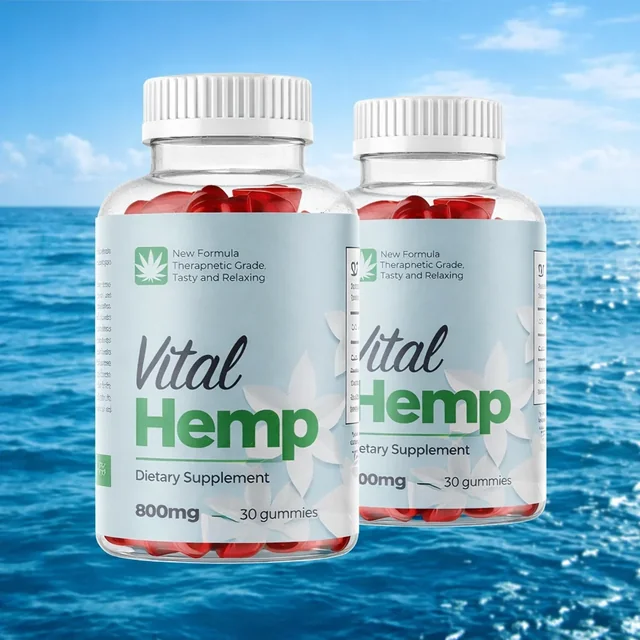
Vital Hemp Gummies
Explore the product packaging and current information from the brand website.
Visit Official Product Website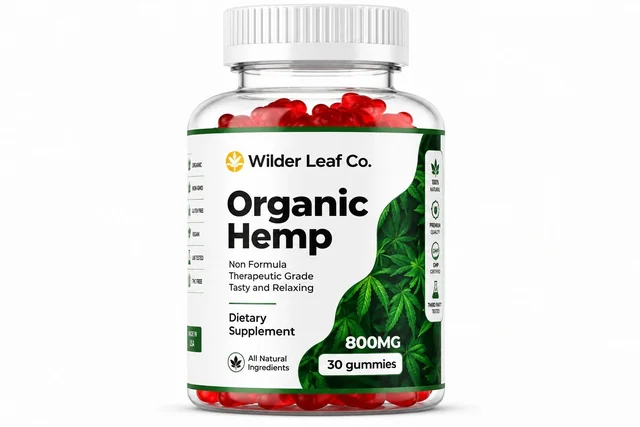
Wilder Leaf Organic Hemp
Explore the product packaging and current information from the brand website.
Visit Official Product WebsiteOur team purchased and inspected the featured products and compared their packaging and declared ingredients with the published information. Affiliate disclosure.
What is the difference?
| Feature | Hemp seed gummies | CBD gummies |
|---|---|---|
| Ingredient | May contain oil or another eligible seed ingredient. | Contain cannabidiol as a stated ingredient. |
| Australian framework | Food rules may apply if composition and presentation meet the requirements. | Separate medicinal or other regulatory requirements may apply; not automatically ordinary food. |
| Evidence | Depends on the actual composition and claimed benefit. | Evidence for one CBD preparation cannot be generalised to all gummies. |
| THC content | Cannot be determined from the product name alone. | Depends on the formulation and verification. |
Hemp seed oil and hemp extract
Seed oil is made from hemp seeds and is distinct from cannabinoid-rich preparations obtained from other plant parts. A label saying only “hemp oil” or “hemp extract” may not specify which preparation is present. This ambiguity is why the full ingredient list is more useful than the marketing headline.
The endocannabinoid system
The endocannabinoid system is a biological signalling network involved in multiple physiological processes. Its existence does not demonstrate that a particular gummy changes mood, improves sleep or relieves discomfort. Seed-derived food ingredients should not be assumed to act like a cannabinoid medicine.
What does Australian regulation say?
Qualifying low-THC hemp seed foods have been permitted under the Food Standards Code since 2017. CBD and other cannabis products are governed by separate requirements depending on their formulation and intended use. For prescription medicines, including medicinal cannabis preparations, advertising to the public is prohibited. Refer to the regulators rather than relying on an online label of “legal hemp”.
Comparing product claims
Two gummies with similar packaging may contain very different ingredients. A certificate of analysis can help describe composition, but cannot establish whether a claimed health outcome is clinically supported. Do not infer a product's effects or equivalence from reviews of unrelated formulations.
For more about interpreting supplier information, see our Australian consumer guide. The Hemp Gummies Australia homepage brings together our existing coverage.
Two terms that describe different things
The word hemp is used in agriculture, textiles, foods and other industries. CBD is the abbreviation for cannabidiol, a particular chemical compound. Consequently a comparison between the two words is not quite a comparison between two ingredients at the same level of detail. One tells us something about the source or category; the other names a compound. A hemp-derived preparation can contain CBD, but the word hemp by itself does not tell us whether that is the case. A seed oil and a preparation from flowering material can have different compositions even when they originate from the same species of plant.
This distinction is useful for people interested in botanical foods. It leaves room to appreciate seed-derived ingredients for what they are rather than judging them against a medicinal preparation with a different intended purpose. It also prevents an appealing food format from being mistaken for a particular medicinal product simply because both are sold in a chewable form.
Start with the part of the plant
A useful mental picture is to separate the seed, the leaves and the flowering material before thinking about processing. Seeds are the starting material for ordinary hemp seed oil and other seed-derived ingredients. The plant's other parts can be the starting material for preparations with a different cannabinoid profile. How those materials are processed matters as much as their names. The word extract is broad and does not identify the chemical components without further information.
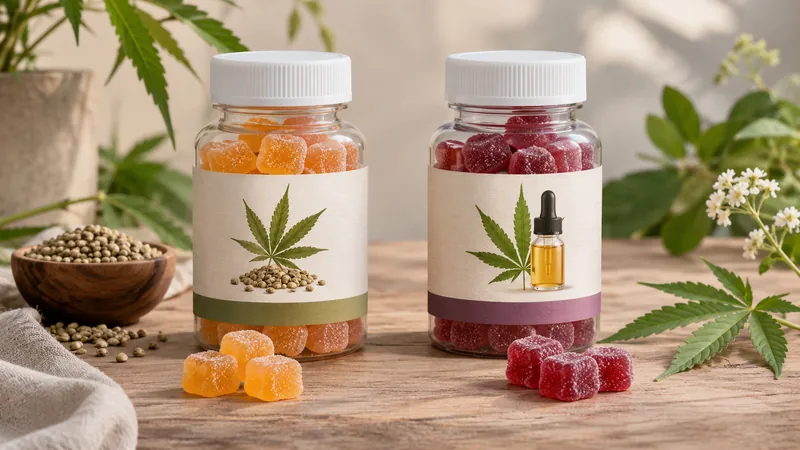
A person browsing online might encounter two jars with the same leaf symbol and an identical red gummy illustration. Neither the shape of the leaf nor the appearance of the confection tells us which part of the plant supplied the ingredient. The important information is the ingredient declaration and any reliable supporting documentation. If those identify different source materials, treat the products as different even when their packaging seems similar. This is the starting point for a comparison that does not rely on marketing language.
Why milligrams alone cannot settle the comparison
Suppose one illustrative label says 800 mg of a hemp ingredient per container and a second label names a particular compound with a quantity per piece. It would be a mistake to compare the numbers as if they measured the same substance. Even two numbers relating to the same substance may be expressed on different bases. Before comparing them, identify both the named material and the reference unit. An amount for the whole package cannot be read as the amount in each gummy.
This is especially important because the front of a package is often designed for rapid recognition. A large numeral may be useful for identifying a variant, but the surrounding words supply its meaning. A label may refer to a blend rather than a single compound. Without the relevant details it is better to say that the amount is unclear than to infer the cannabinoid content. Our ingredient guide explores the structure of labels in more depth. The comparison here focuses on why the identity of the substance must come before any numerical comparison.
What we observed in the featured hemp products
The featured products were purchased and inspected by our editorial team through the websites we identify as official. The received products and their ingredient declarations matched the information we reviewed. The supplied front photographs of Vital Hemp and Wilder Leaf show distinct branding and a 30-gummy count, with an 800 mg marking. We regard these as observations about packaging and product identity. They are not findings about CBD concentration, clinical outcomes or the equivalence of two formulations.
Our own review process therefore treats a label observation differently from a scientific claim. We can describe the visual distinction between the pale blue Vital branding and the green-and-white Wilder Leaf presentation. We cannot derive the composition of the gummy from the colour of its wrapper or the size of the front number. Reader feedback and public research can help us identify additional questions to ask; they do not replace analytical results for a particular batch. The two featured brands are not presented here as a controlled comparison with a CBD medicine.
The delivery format is a separate comparison
A chewable product can contain a variety of ingredients. A gummy made with a plant-derived gelling agent may differ in texture from one made with gelatine. Acidity, water content and flavouring can influence the taste and firmness. Those characteristics are distinct from the hemp component. A difference in the colour or sweetness of two gummies tells us very little about the underlying source ingredient.
Oils, capsules and gummies also present information in different ways. An oil may be labelled by volume, a capsule by unit, and a gummy by piece or container. For a reader interested in the format, it can be helpful to compare storage instructions, allergen information and packaging. For a reader investigating a medical claim, these characteristics are not evidence of effectiveness. The appropriate evidence would concern the particular preparation, population and outcome. Keeping these questions separate allows a fair comparison without treating all plant-based products as though they worked in the same way.
How the Australian context changes the question
Australian readers often see content written for markets where the rules and retail categories differ. A description from another country may refer to a product category that is not treated in the same way in Australia. Food Standards Australia New Zealand explains the framework for permitted low-THC hemp seed foods. The Therapeutic Goods Administration provides separate information about medicinal cannabis. These frameworks address different questions, and a legitimate seed food is not the same regulatory category as a prescription medicine.
A further distinction is between the status of a business and the status of a product. An authentic brand website establishes where a brand presents its information. It does not, by itself, establish that every formulation is authorised for every use or jurisdiction. Readers should avoid applying a foreign rule simply because the product images look familiar. The Australian regulator's information is a more useful basis for understanding local categories than broad statements about global legality.
Reading a research claim without losing the context
A reference to a scientific study may sound reassuring, but the first question is what the researchers actually investigated. Was the material an isolated compound, a standardised preparation or a different formulation? Was the research conducted in people or in a laboratory? Was the outcome measured directly? A summary that omits these distinctions may make the result sound more general than it really is.
For example, a research article about a particular cannabinoid medicine cannot establish that a seed-based food will reproduce the same effect. Nor does an observation about the nutritional composition of hemp seeds establish that every finished confection contains nutritionally meaningful quantities. We find it helpful to classify claims into three groups: what the label states, what the published research examines, and what is actually known about the particular finished product. A clear separation of these categories is more informative than a single broad claim about the benefits of hemp.
A worked example: compare the descriptions, not the colours
Consider three entirely hypothetical package descriptions. One names hemp seed oil, another simply says hemp blend, and a third explicitly names cannabidiol. The first identifies a source material, the second leaves important details open, and the third names a compound. We would not place them in a single ranking according to the number printed on the front of the container. Instead, we would record the description exactly, look for clarification where the blend is unspecified and consider the relevant regulatory category.
This example is not a product recommendation or an instruction for using any cannabinoid. It is a way of interpreting information. If the intended comparison is nutritional, look for reliable nutrition information about the finished food. If it is about a medicine, the relevant clinical and professional context is different. If the concern is authenticity, compare the seller and the packaging. A useful review does not pretend that one answer can address all three questions.
Frequently encountered misconceptions
Are hemp gummies simply a weaker version of CBD gummies? No. The terminology does not describe a universal strength relationship. Can the colour of a gummy identify its cannabinoid content? No; colour may reflect the recipe or colouring ingredients. Does an official product website establish medical effectiveness? No; authentic information about a brand and evidence for a health outcome are distinct matters.
Can hemp seed foods be a legitimate and interesting part of Australian food culture? Yes, within the relevant food standards. Their established uses deserve to be understood without borrowing claims from unrelated medicinal preparations. Our editorial perspective is hemp-friendly precisely because we think the different uses of the plant merit clear explanations. The goal of this comparison is not to declare a winner, but to help readers understand what they are actually comparing. For further information, the official sources below provide the local regulatory context.
Frequently asked questions
Are hemp gummies a weaker form of CBD gummies?
No. The terms describe different ingredients, not a universal strength scale. Compare the named ingredient and serving information.
Can colour tell me whether a gummy contains CBD?
No. Appearance reflects the recipe. The ingredient declaration helps identify the formulation.
Sources and further reading
- FSANZ — Hemp seeds as food
- TGA — Medicinal cannabis access and advertising
- Health Canada — Cannabidiol and industrial hemp
These resources provide further information on consumer, food and health topics.