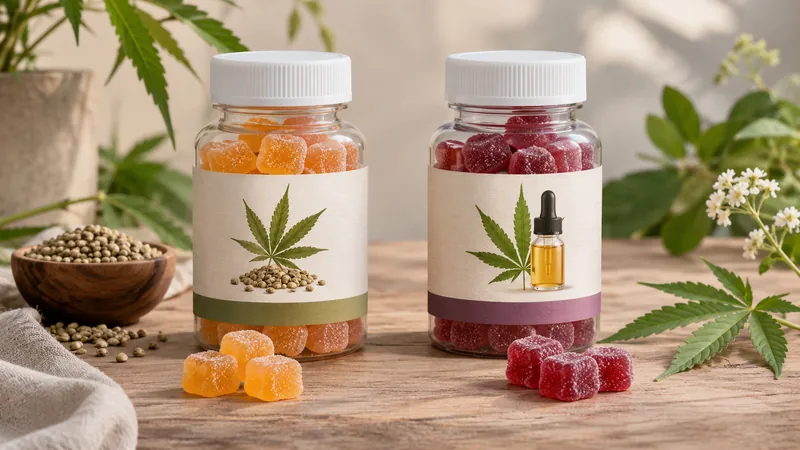
Anxiety Gummies in Australia: Understanding the Claims
Understand claims made about hemp and anxiety gummies, the limits of product evidence and when to seek qualified mental health support.

People searching for anxiety gummies may encounter products marketed for calm, relaxation or sleep. The term is not a medical classification. It does not demonstrate that a product has been shown to treat anxiety or that its ingredients are appropriate for a particular person.
Hemp and anxiety claims
Hemp seed oil, hemp extracts and CBD are distinct ingredients. Research concerning a particular medicinal cannabinoid preparation cannot establish that a different gummy will relieve anxiety. A testimonial, botanical ingredient or a reference to the endocannabinoid system is not a substitute for controlled evidence about the finished formulation.
What to look for in product information
Read the full label and distinguish the ingredient quantities from advertising descriptions. Be especially cautious of promises to stop panic attacks, replace prescribed treatment, prevent burnout or eliminate side effects. A food product should not be assumed to treat a mental health condition.
Australian regulation and personal safety
Permitted hemp seed foods and medicinal cannabis products are subject to different regulatory requirements. The TGA restricts public advertising of prescription medicines, including medicinal cannabis. For more on ingredient terminology, see our comparison guide.
Do not use an unverified gummy as a replacement for prescribed treatment or use it to manage an acute panic attack. If anxiety is persistent, severe or interfering with your life, a GP or qualified mental health professional can help you understand appropriate options. A pharmacist can advise on potential interactions with medicines.
How we approach this topic
Our purpose is to help readers interpret product descriptions and distinguish available evidence from marketing. We do not offer clinical advice, prescribe products or recommend a gummy for treating anxiety.
Why the wording matters when searching online
A phrase used in a search box often describes a hope rather than the identity of a product. Someone typing anxiety gummies may be looking for information about stress, a particular brand mentioned by a friend, or an explanation of a claim they saw in an advertisement. These are quite different needs. It is helpful to begin by identifying the question instead of assuming that the wording describes a recognised treatment.
There is nothing unusual about wanting an approachable format or being curious about plant-derived ingredients. The issue is whether a particular claim has an appropriate basis. A familiar chewable format may feel less complicated than a medicine cabinet, but appearance does not establish the role of the product. We use this page to explain how to read the language surrounding such products and how to distinguish information about everyday preferences from information about a health condition.
Everyday stress and a health condition are not interchangeable
Stress in everyday language may refer to a deadline, a difficult conversation or a busy period. Anxiety may describe an emotion in an ordinary situation, but the term also appears in the names of health conditions. A short-lived feeling and a persistent problem that affects daily functioning should not be treated as the same thing simply because they are described with similar words online.
Healthdirect provides Australian information on anxiety, including the range of symptoms and the availability of professional assessment. People do not need to establish a diagnosis on their own before asking a health professional for help. Describing what has changed in sleep, concentration or daily activities can be useful when discussing concerns. The aim is to understand the situation rather than to match a symptom to a product advertisement. This distinction also makes it easier to read wellness content without confusing it with clinical guidance.
How to separate a product description from a claim
Read the sentence as written and ask what it actually promises. A description of a flavour, texture or individually formed piece is a statement about the format. A statement that a product treats an illness is a different kind of assertion. Between those two are broad expressions about lifestyle or wellbeing that may sound positive without specifying a measurable outcome. It is worth noticing the difference rather than treating every sentence on the page as evidence of a therapeutic effect.
A photograph of a cup of tea and a notebook can communicate the topic of a wellness article, but it does not demonstrate that a product affects anxiety. The same applies to a testimonial, a botanical illustration or a reference to a traditional practice. We deliberately distinguish these visual and descriptive elements from evidence about a finished formulation. A site can appreciate hemp as a plant-derived ingredient while taking particular care with claims concerning mental health.
What counts as relevant research?
Scientific research is most useful when the material examined is clearly identified. If a study looked at a particular medicinal preparation, it is important not to substitute the name of an unrelated commercial gummy when describing the result. Details such as the study population, comparator, outcome and preparation affect how the findings can be interpreted. A headline that refers generally to cannabis research may not provide that information.
The existence of an interesting biological mechanism is not the same as evidence that an individual product is an effective treatment. Research into a compound may generate questions for further investigation. It does not automatically answer whether a different commercial formulation has a meaningful benefit for a particular person. We prefer to retain this distinction rather than use the existence of research as a general endorsement of the category. Our comparison of hemp and CBD terminology provides additional background on why the source ingredient matters.
What the ingredient label can and cannot tell you
The label is a useful source of product identity. It can describe ingredients, allergens, quantities and directions provided by the manufacturer. That information may be relevant when discussing a product with a pharmacist or another qualified health professional. It cannot establish from its wording alone that a treatment claim is supported. Similarly, a plant-derived ingredient should not be regarded as automatically compatible with every medicine or health situation.
If someone has an existing treatment plan, it is especially useful to discuss any intended changes with the professional involved. A product photograph or a list copied from a seller may be incomplete, so the actual packaging can help clarify the conversation. It is sensible to bring the full ingredient declaration rather than only the brand name. This is a practical information step, not advice to start, stop or replace a particular treatment.
A reader feedback example: distinguishing the questions
Imagine an anonymised hypothetical message saying that a reader saw a gummy described as calming and wondered whether that meant it was intended for anxiety. We would first separate the description from the question. Is the reader trying to understand an ingredient, check a seller's statement, or seek personal advice about symptoms? The first two may be appropriate topics for editorial research. The third belongs with a qualified health professional who can consider the person's circumstances.
This example is illustrative, not a real customer testimonial. Our actual reader emails help us identify the kinds of information that deserve closer investigation, but we do not turn personal experiences into medical evidence. If several people ask about the meaning of a label, a useful response is a clearer explanation of that label. If people report different personal outcomes, those reports alone cannot establish why the outcomes differed. That is why our editorial method does not use unverified experiences to claim a success rate.
What a constructive next step can look like
A person researching persistent anxiety can benefit from separating their information into two short notes. One can describe the concerns they want to discuss: how long they have noticed them, what situations make them more noticeable and how they affect daily life. The other can contain questions about any product or ingredient they are curious about, including a photograph of its full label if available. A clinician or pharmacist can use the information in the appropriate context.
Healthdirect describes several approaches that may form part of anxiety care, including psychological support and medicines where appropriate. Individual needs vary, and there is no requirement to choose a product before seeking help. A practical first conversation may be enough to establish what further assessment is useful. If someone is in immediate danger or needs urgent medical assistance in Australia, call 000. For non-emergency health guidance, Healthdirect offers information and access to health advice. These options are separate from the editorial purpose of a hemp information website.
Australian rules and the language of wellness
Australia permits qualifying low-THC hemp seed foods under its food framework, and medicinal cannabis is addressed through a separate regulatory system. Public advertising restrictions for prescription medicines are relevant when online content presents a medicinal cannabis product as a consumer remedy. A legitimate brand identity or a favourable product experience does not remove those distinctions.
For this reason, this article does not contain product referral buttons. It is intended for readers who are trying to understand claims about anxiety rather than people comparing packaging for an ordinary purchase. Other pages on our website discuss the hemp category and ingredient terminology in detail. Here the emphasis remains on reading health-related information carefully and recognising the difference between consumer education and individual medical advice. This is consistent with our hemp-friendly editorial approach: we value clear information about the plant without extending claims beyond their evidence.
Questions readers can use when assessing information
Does the source name the exact preparation it is discussing? Does it distinguish everyday stress from a diagnosed condition? Does it explain what type of evidence is available, or simply refer to science in general? Does it state whether an outcome was measured in the research being cited? These questions are more useful than judging an article by the attractiveness of its imagery or the length of its list of purported benefits.
A balanced article can acknowledge interest in botanical ingredients and explain what is uncertain at the same time. It should not require a reader to accept a treatment claim in order to appreciate the topic. We welcome corrections to our explanations of terminology or Australian rules. The official health and regulatory resources below are a starting point for further reading, rather than a substitute for personal care. The central message is that curiosity about hemp is compatible with making informed health decisions based on appropriate evidence.
Frequently asked questions
Are hemp gummies an established treatment for anxiety?
Hemp gummies are not established as a general treatment for anxiety. Evidence for a particular medicinal preparation cannot be assumed to apply to other gummies.
Is everyday stress the same as an anxiety disorder?
No. If anxiety persists or affects everyday life, a health professional can help you explore appropriate care.
Sources and further reading
- Healthdirect Australia — Anxiety
- Healthdirect Australia — Generalised anxiety disorder
- TGA — Access to medicinal cannabis products
- FSANZ — Hemp seeds as food
These resources provide further information on consumer, food and health topics.